- Mobility
- Electronics
- Building / Infrastructure
- Sustainability
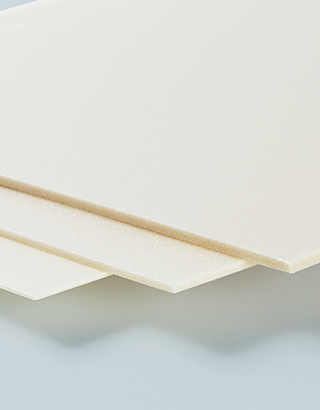
High heat-resistant, high-rigidity PP foam SOFTLON™ SP series
High-rigidity PP foam with excellent dimensional stability under high temperatures
A polypropylene foam based on heat-resistant SOFTLON™ NF, with further enhanced thermal resistance and rigidity.
It demonstrates excellent dimensional stability even at temperatures up to 120°C and is suitable for deep drawing by vacuum forming.
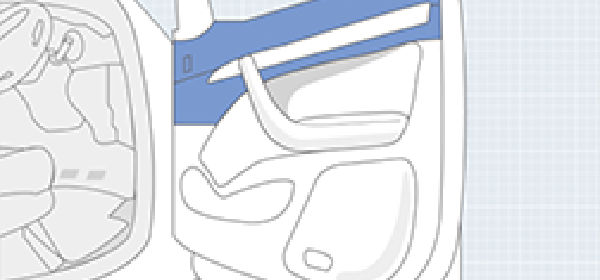
It is widely used as a lightweight and high-strength material in automobile door trims, seat backs, packaging products, and protective trays for fruits.
It demonstrates excellent dimensional stability even at temperatures up to 120°C and is suitable for deep drawing by vacuum forming.
It is widely used as a lightweight and high-strength material in automobile door trims, seat backs, packaging products, and protective trays for fruits.
Features
- High expandability and stiffness
- Suitable for tape bases with superior skin strength (against peeling)
- Maintaining the high basic performance of SOFTLON™
Applications
- Door trim
- Instrument panel
- Floor sheet
- Seat back, etc.
- Packaging
- Sports goods, etc.


Product Information
Thermoformability
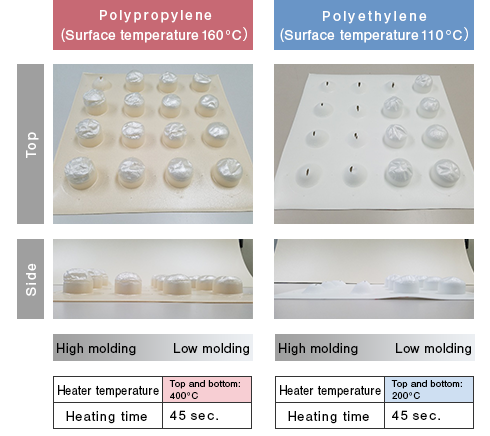
Polypropylene (PP) resin has excellent heat-stability, SOFTLON™ SP can withstand high temperatures during molding, enabling highly deep drawability.
- Vacuum forming
-
Vacuum forming test video
* Click to go to the YouTube site.
SOFTLON™ sheet is heated and softened to closely affix to the mold and then air is evacuated to produce a thermoformed product.
- After vacuum forming
- Mold-drawing ratio
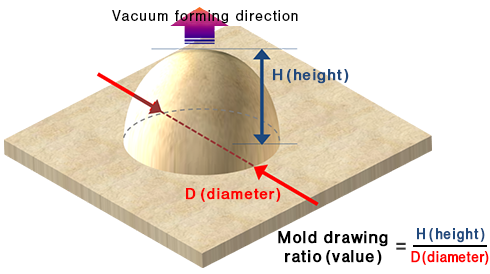
Mold drawing ratio (H/D)
The ratio of the height (H) to the diameter (D) of the vacuum forming mold to show how deep the workpiece is drawn.
Measurement: Sekisui method
The foam is heated to a specified temperature, then taken out of the furnace to vacuum-form into cups of different heights.
Heat resistance
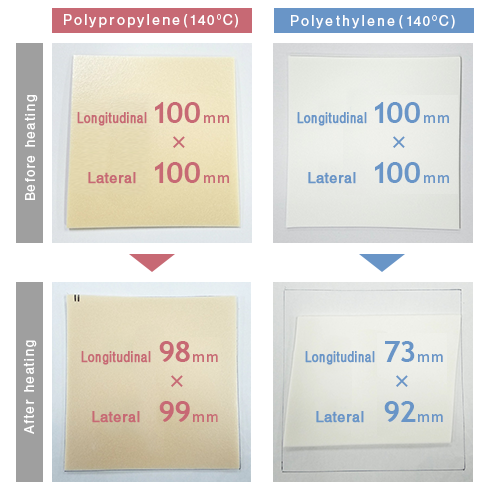
With excellent heat-resistance, polypropylene (PP) resin has minimal thermal shrinkage even in the high temperature range.
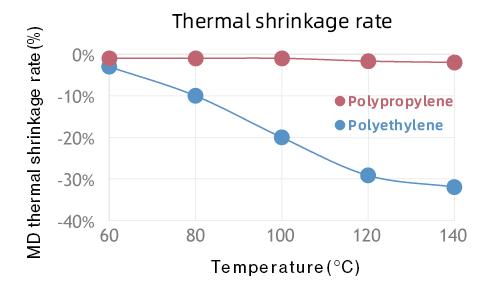
Thermal shrinkage rate
The rate represents how much the foam changes in size at each temperature when heated without an external force applied. While polyethylene foam deforms as shown in the figure on the left when heated to 80°C or higher, polypropylene foam has excellent heat resistance with a shrinkage rate of 3% or less even at 140°C.
Measurement: According to JIS K 6767
The foam is heated to a specified temperature for 10 minutes, then taken out and left at room temperature for one hour to measure the dimensional change before and after heating.
Click here for basic information on the SOFTLON™ series and a comparison with other foam materials.
What Are Sekisui Chemical’s Foam Materials?For Overseas Inquiries
Our global supply network, with 8 manufacturing sites worldwide, supports customers across international markets. Please visit the link below and contact your nearest Sekisui Chemical Foam office.
View our global networkDocument download
- All
- Properties List
- TDS