What Is Impact Resistance? Sekisui Technologies Supporting Electronic Devices
2026-09-10
Learn the fundamentals of impact resistance and evaluation methods, and discover Sekisui’s material technologies that support electronic devices.
Electronic devices such as smartphones and personal computers have become indispensable to modern life.
In recent years, new markets, including wearable devices, have continued to expand.
In this article, we introduce Sekisui's shock absorption technologies that support the ever-evolving electronic device industry, along with the features of our products and their applications.
Contents
- What Is Impact Resistance
- Sekisui Technologies Supporting Impact Resistance
- Closed-cell Foam XLIM™: An Ultra-Thin Foam That Absorbs Shock Even at a Thickness of Just 0.03 mm
- Waterproof/Shock-Absorbing Foam Tape 5200 Series: Tape-Based Shock Protection
- UV + Moisture-Curing Flexible Adhesive Photolec™ B: Enables Bonding at Widths Below 0.5 mm
What Is Impact Resistance
Various electronic devices contain precision components, including IC chips. Because these components are extremely delicate, it is essential to protect them from damage during use.
Impact resistance is one of the key indicators used to evaluate a product’s ability to withstand impacts such as accidental drops.
Impact resistance can generally be considered from two perspectives.
One is the ability to absorb impacts applied to internal components (stress relaxation), while the other is the ability to prevent bonded materials from separating when subjected to external impacts (peel resistance).
Among Sekisui’s products, Closed-cell Foam XLIM™ is designed to provide stress relaxation, while the Waterproof/Shock-Absorbing Foam Tape 5200 Series and UV + Moisture-Curing Flexible Adhesive Photolec™ B are designed to deliver excellent peel resistance.
Examples of Impact Resistance Evaluation Methods
In a test designed to measure stress relaxation performance, a weight was dropped onto a glass substrate bonded with foam, and the presence or absence of damage was evaluated.
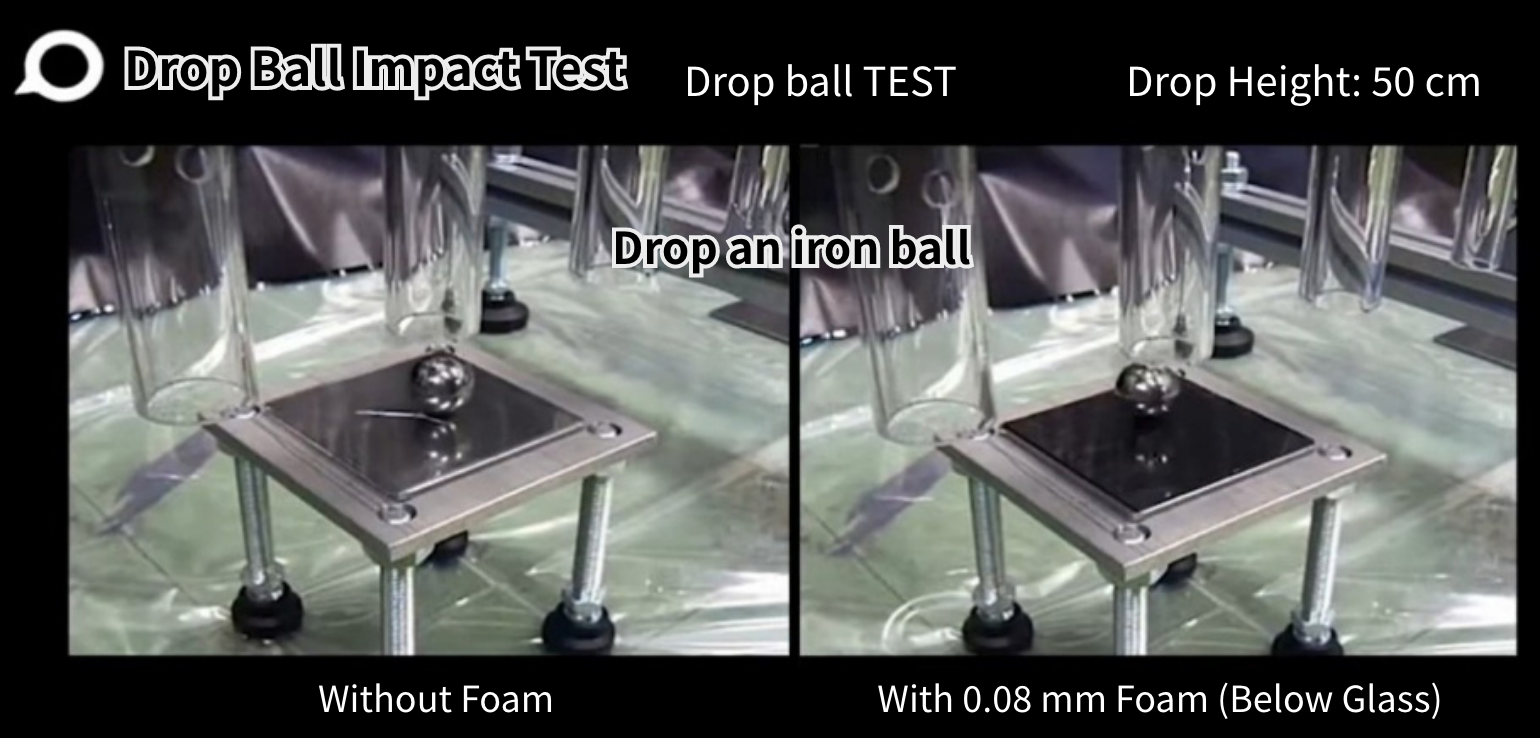
While cracks were observed in the glass without foam, no changes were observed in the glass with foam attached.
In a test to evaluate peel resistance, a weight is dropped onto a test specimen bonded with tape, and the drop height at which delamination occurs is measured.
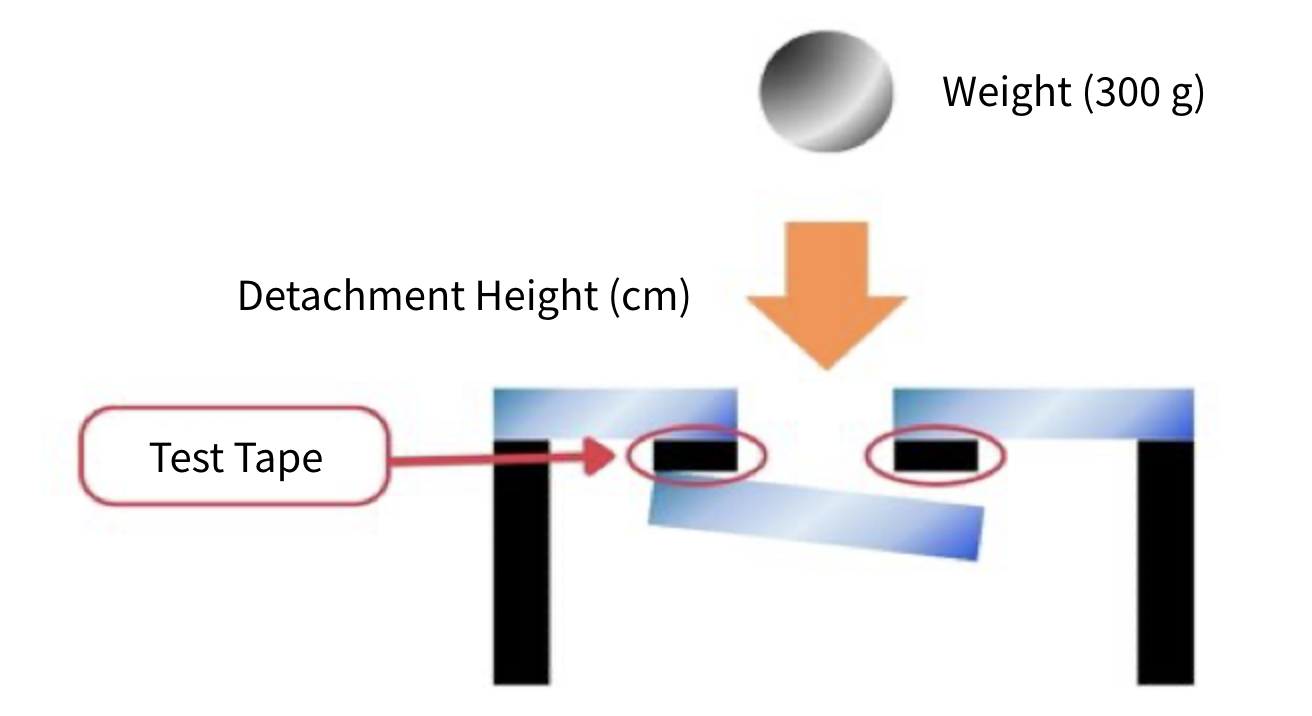
Both tests evaluate how well a material can withstand a given impact.
Sekisui Technologies Supporting Impact Resistance
For electronic devices, the primary impact risk is accidental drops.
Smartphones have likely been dropped by most users at least once.
Many people have also experienced device malfunctions after dropping them.
Generally, one way to improve impact resistance is to make the outer casing more robust. However, as devices continue to become smaller and thinner, it has become increasingly difficult to allocate sufficient space for impact protection. As a result, technologies that deliver high impact resistance within limited space are becoming increasingly important.
Next, we will introduce the features of each product and examples of their applications.
Closed-cell Foam XLIM™: An Ultra-Thin Foam That Absorbs Shock Even at a Thickness of Just 0.03 mm
XLIM™ is an ultra-thin foam sheet.
By filling gaps inside devices, it helps improve impact resistance.
Its ability to effectively absorb shock despite its thin profile is made possible by Sekisui's proprietary foaming technology.
Excellent Flexibility and Shock Absorption Enabled by Its Closed-Cell Structure
Sekisui’s foam features a closed-cell structure in which each air cell is independently enclosed.
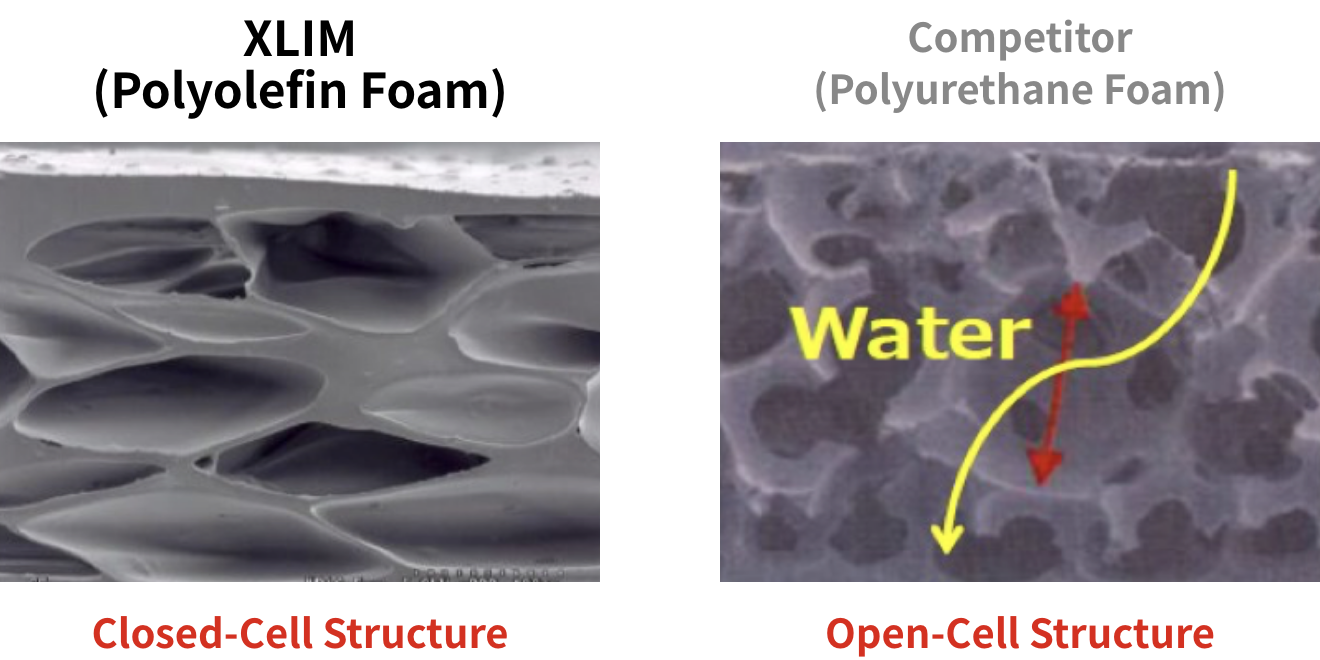
The independently enclosed cell structure enables an exceptional balance of thinness, flexibility, and shock absorption.
In addition, because the cells are not interconnected, the material offers excellent resistance to the passage of air, water, heat, chemicals, and electricity.
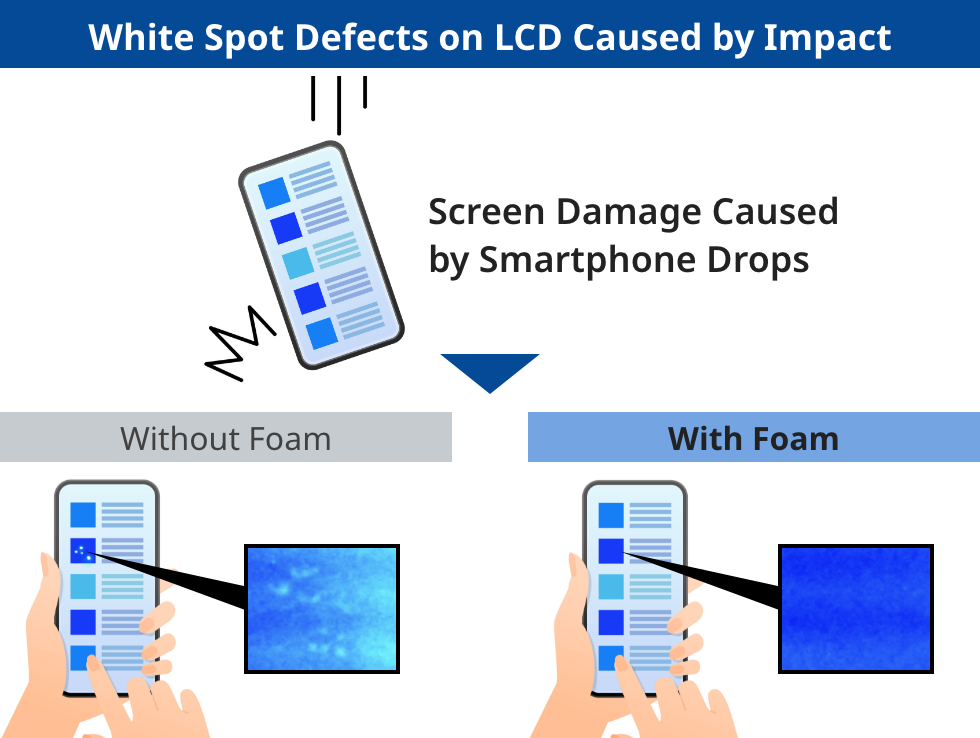
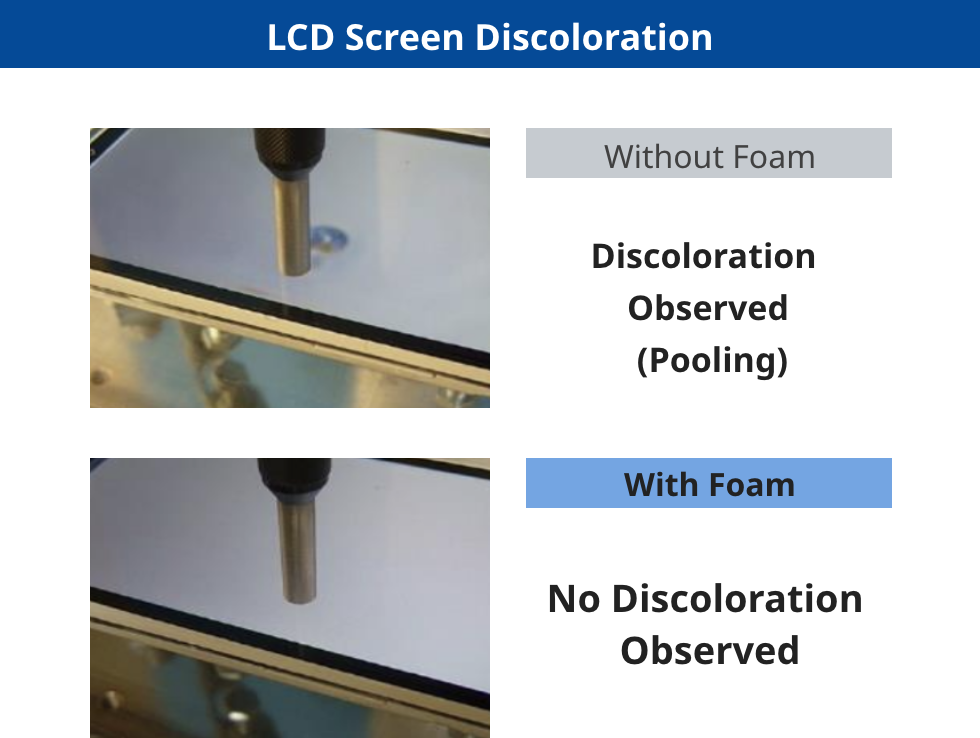
XLIM™ is used for component protection in a wide range of products, including smartphones, PCs, and speakers.
Customizable Processing for Various Applications
Because XLIM™ is supplied as a simple sheet material, it can be processed to meet specific application requirements.
We also offer processing options that are not possible with adhesives or double-sided tapes, such as single-sided fixation for applications requiring reworkability.
Waterproof/Shock-Absorbing Foam Tape 5200 Series: Tape-Based Shock Protection
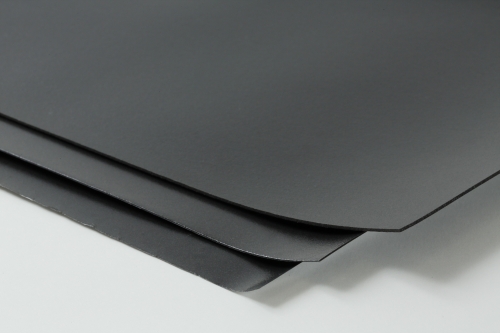
The Foam Tape 5200 Series is a tape-type product featuring adhesive layers on both sides of the foam material described above.
Leveraging the performance of its closed-cell structure, it contributes to impact resistance, waterproofing, and dustproofing.
In recent years, it has been widely used to improve the impact resistance of device housings. Multiple product variations are available depending on the adhesive and substrate, allowing you to select the most suitable option for your application.
Reliable Shock Absorption Even at Widths of 1 mm and 2 mm
Like XLIM™, the foam used as the substrate features a closed-cell structure. The following shows the results of drop impact resistance tests conducted on products with widths of 1 mm and 2 mm.
Evaluation Method
1. Die-cut the tape (3-inch diameter, 2 mm width, and 1 mm width) and apply it to a perforated PC board.
2. Place a PC board on top of the tape and apply pressure at 5 kg for 10 seconds.
3. After leaving the assembly at room temperature for one day, drop a weight and measure the height at which the PC board detaches.
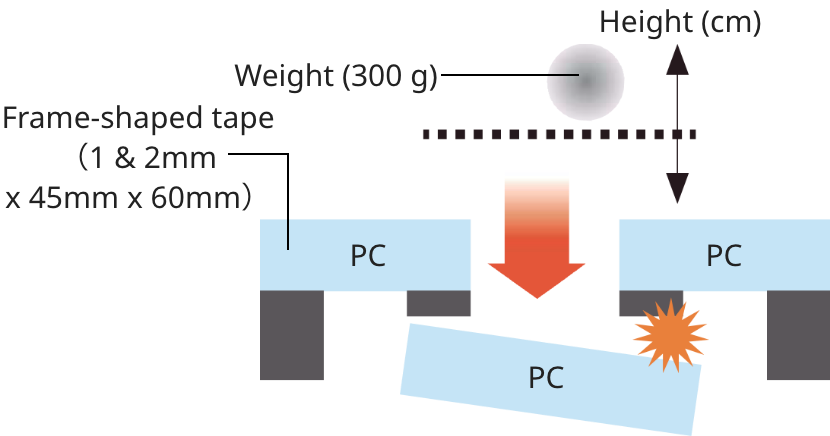
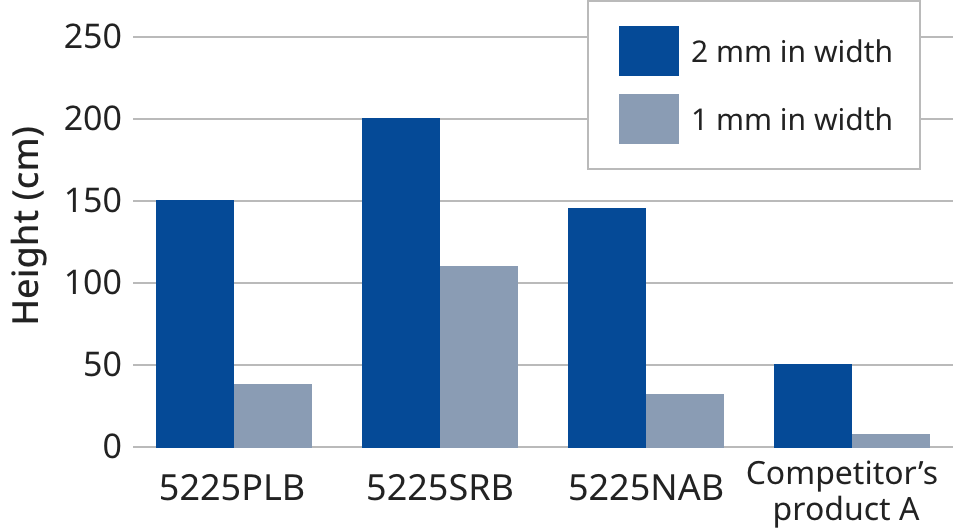
Sekisui’s foam tapes provide reliable shock absorption even in narrow widths.
They are ideal for applications with limited bonding space, such as smartphone display bezels.
High Adhesion Helps Prevent Peeling
The Foam Tape 5200 Series also features excellent adhesion.
A variety of options are available to meet different requirements, including products with strong initial tack.
Evaluation Method
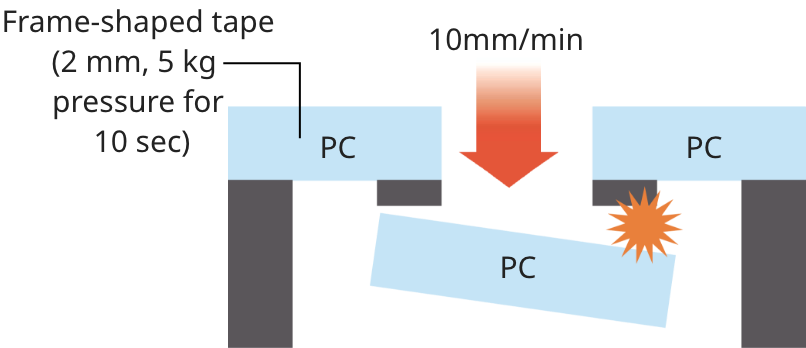
1. Apply the evaluation tape to a perforated PC board.
2. Place various adherends on top of the tape and apply pressure at 5 kg for 10 seconds.
3. After leaving the assembly at room temperature for one day, apply a load through the hole in the PC board as shown in the figure and compare the load at which the adherend detaches.
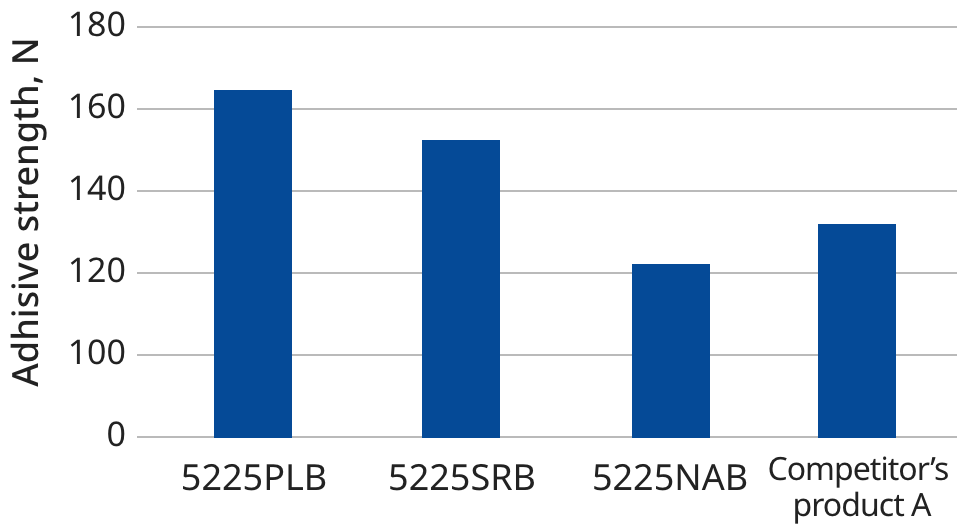
In addition to PC boards, it also provides strong adhesion to adherends such as stainless steel (SUS) and glass.
Leave it to Sekisui, backed by extensive experience in developing a wide range of tape products.
Suitable for Both High- and Low-Temperature Environments
For devices used in high- and low-temperature environments, the ability to withstand temperature fluctuations is also an important consideration.
The Foam Tape 5200 Series includes products specifically designed for both high- and low-temperature applications.
You can use them with confidence even in environments where temperature changes are a concern.
UV + Moisture-Curing Flexible Adhesive Photolec™ B: Enables Bonding at Widths Below 0.5 mm
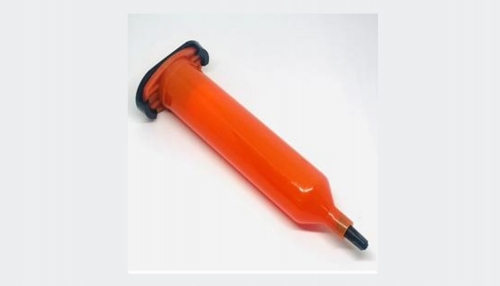
Photolec™ B, a UV + moisture-curing flexible adhesive, delivers these performance benefits in an even more space-saving form than tape.
Some may assume that adhesives are unsuitable for narrow spaces because of adhesive flow.
Here, we explain why Photolec™ B can be used in ultra-narrow bonding applications and how its curing mechanism works.
High-Precision Bonding Through UV + Moisture Curing
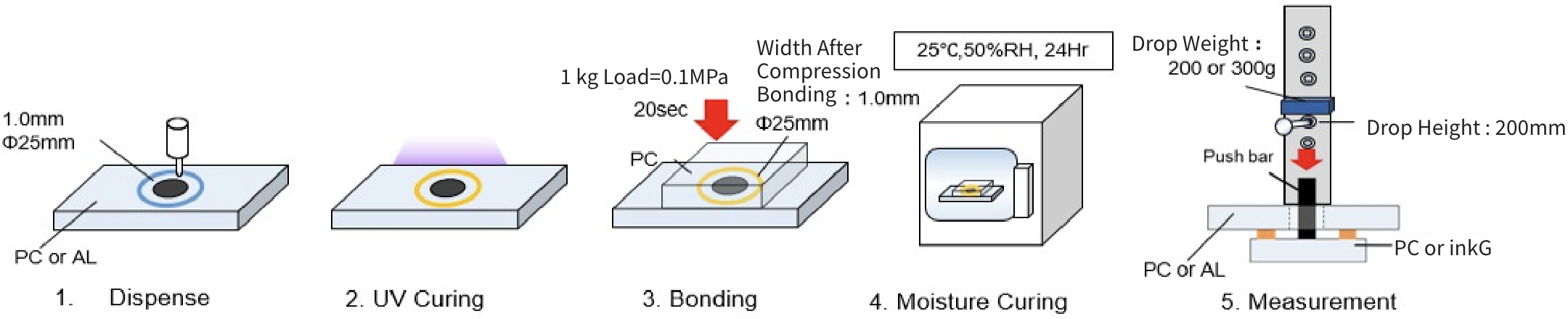
After application, Photolec™ B can be temporarily fixed by UV irradiation.
This prevents adhesive flow and enables reliable bonding in narrow-width applications.
Traditional adhesives often require heating before application.
Because Photolec™ B can be applied at room temperature, no heating equipment is required.

Combines Narrow-Width Bonding with High Impact Resistance
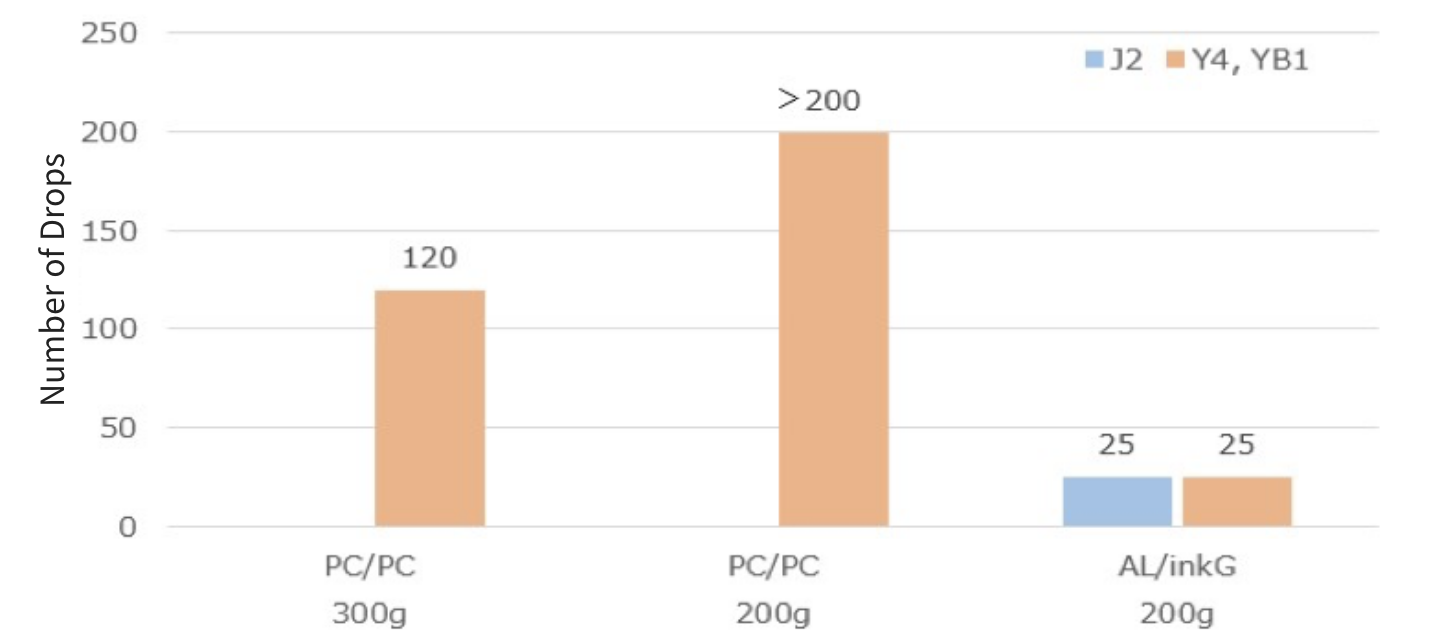
Photolec™ B not only enables ultra-narrow-width bonding but also provides excellent impact resistance.
In drop impact testing, repeated impacts were applied to bonded components to evaluate the durability of the bonded area. The results confirmed a high level of bonding reliability.
Suitable for 3D Curved Surfaces and Non-Linear Designs Thanks to Its Adhesive Form
Double-sided tape is currently one of the most commonly used methods for securing precision components.
However, with double-sided tape, bonding locations are generally limited to straight lines. In addition, partial bonding can be difficult because it increases assembly time and effort.
As an adhesive, Photolec™ B offers greater flexibility and can accommodate layouts beyond straight-line applications.
It is particularly well suited for applications that are difficult to address with double-sided tape, such as bonding curved surfaces.
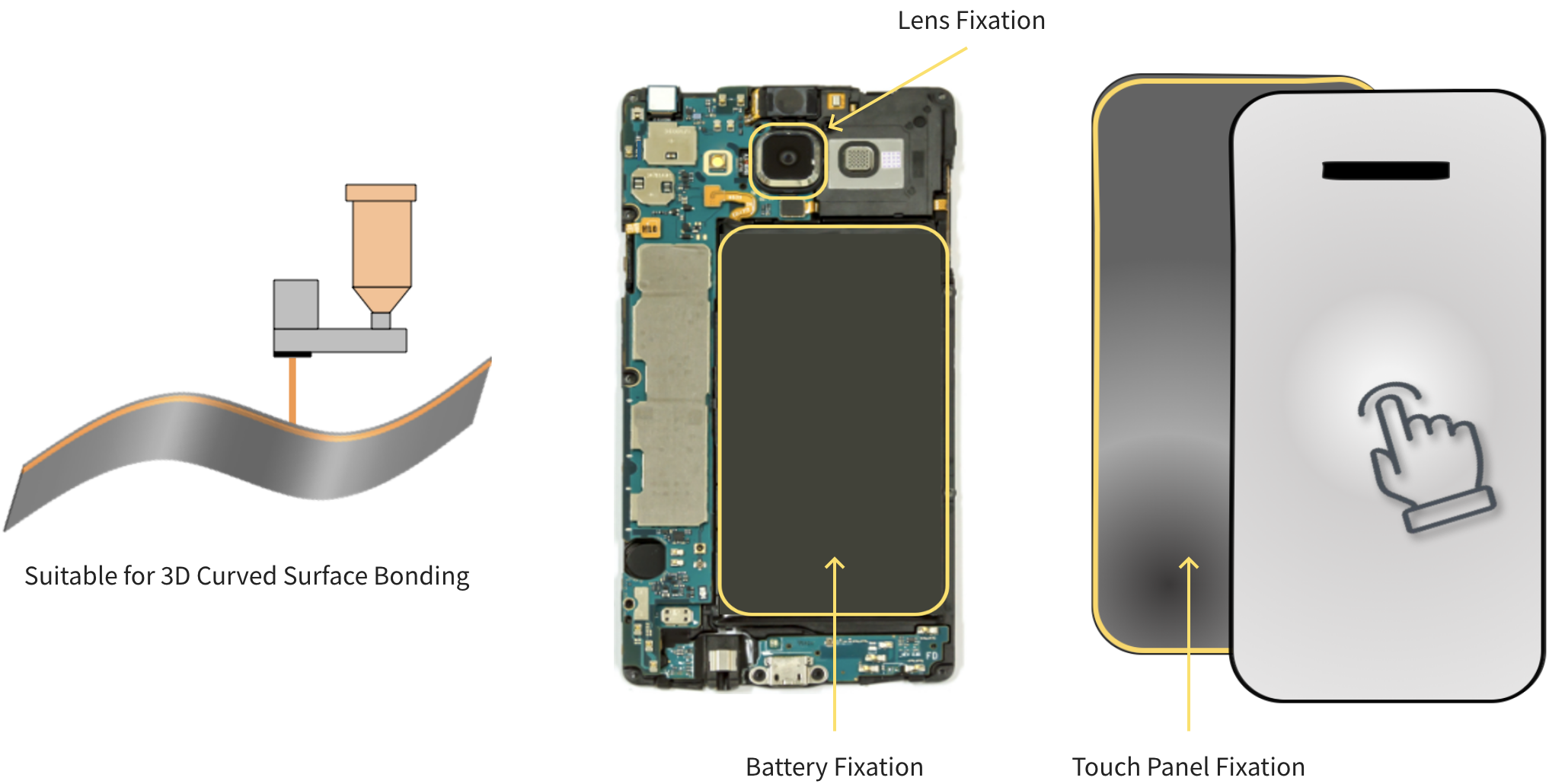
In addition, it retains its flexibility even after curing, allowing it to accommodate warpage and deformation of bonded components.
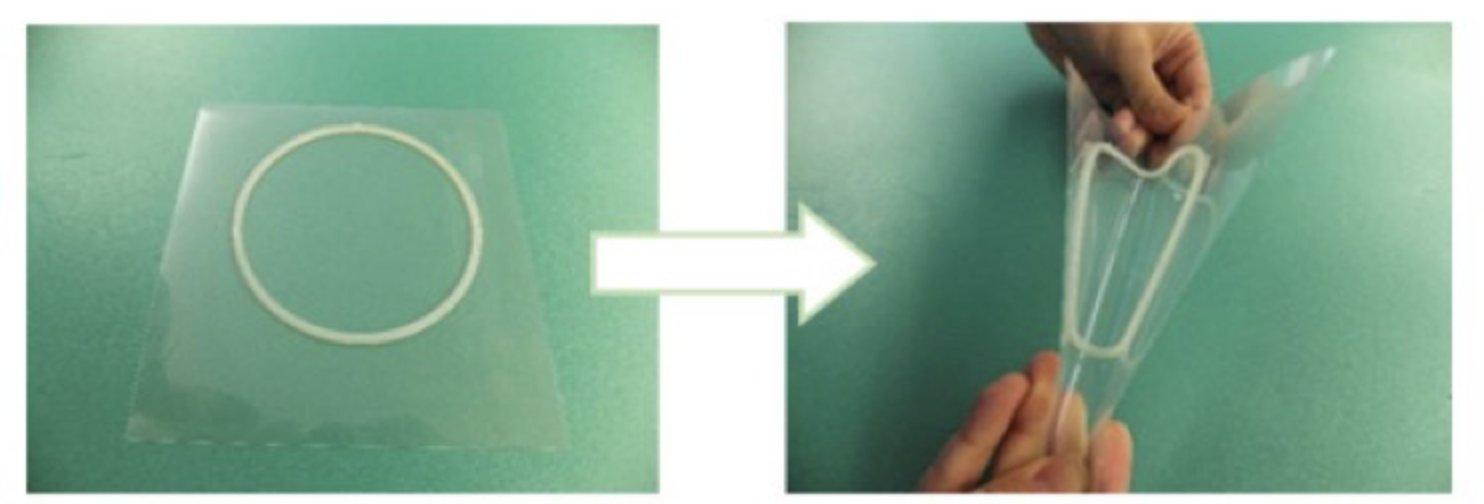
Photolec™ B has already been adopted in applications such as next-generation foldable smartphones.
_防水・衝撃吸収フォームテープ 5200_png_w500px_h500px.png)